Claims portals change often and break in small ways: a validation dropped in a refactor, a date picker that accepts tomorrow, a search that quietly returns nothing. This example follows a QA lead at a made-up insurer through her first week with InsightTestBench, from an empty bench to a nightly suite that pages the team only when something that worked yesterday stops working.
Tidewater Mutual's Harbor Claims Portal
Tidewater Mutual (a fictional insurer) runs the Harbor Claims Portal, where adjusters log first notice of loss (FNOL), search claims and request payments, and supervisors approve payments above an adjuster's authority. Maya, the QA lead, has two testers, a release every week and a regression checklist in a spreadsheet that nobody has fully run since spring.
The week at a glance
Monday: from a brief to plans
Maya writes a brief: the portal's staging URL, the three roles (adjuster, supervisor and an anonymous visitor on the public claim-status page), and a note that FNOL needs photos as sample data. In the crawl options she gives the login URL, the names of the environment variables that hold each test user's credentials, and the selector that appears once the claims dashboard has loaded.
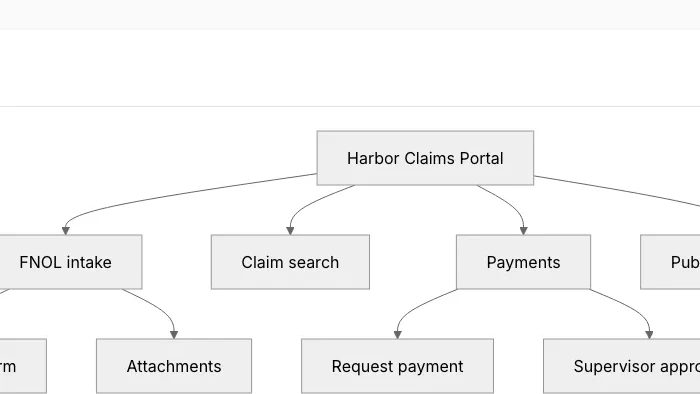
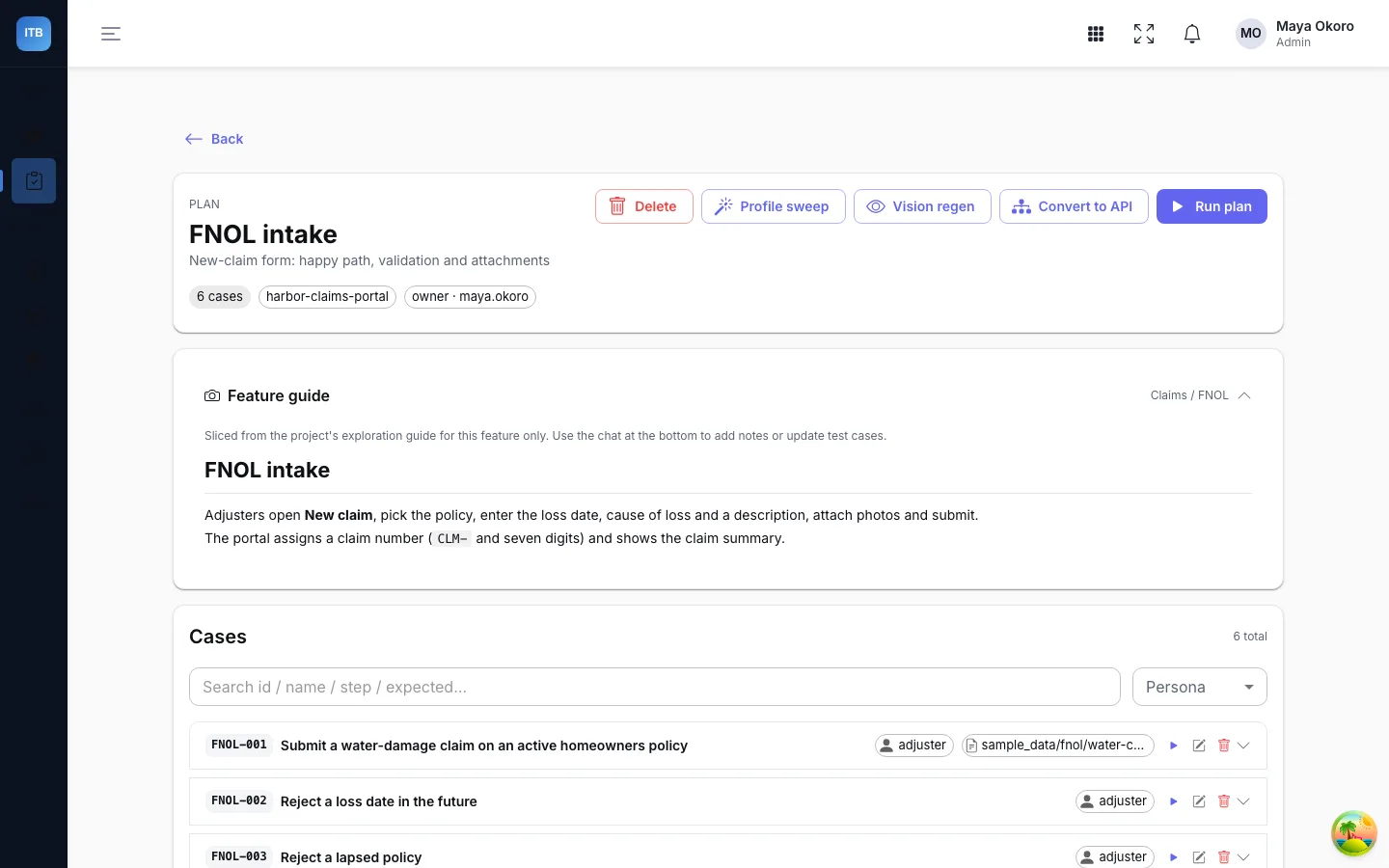
The bootstrap produces an exploration guide, a feature tree (FNOL intake, claim search, payments, public claim status) and a plan per
feature. Maya and her testers spend the afternoon reading: they merge two overlapping features, delete cases that test the vendor's login
page, and add an assert_aria_invalid to each validation case so it checks the field, not just the message.
Tuesday: a frozen suite and a schedule
Not every case belongs in the nightly run. Maya composes a regression plan of eight cases: the happy path and two validations for FNOL,
two searches, and three payment API cases (create, the self-approval block, supervisor approval). She schedules it daily at 02:00 as the
adjuster on staging, with notify_on set to regressions and the team's incoming-webhook URL. That night's run passes
8 of 8 and becomes the baseline.
Wednesday: two regressions
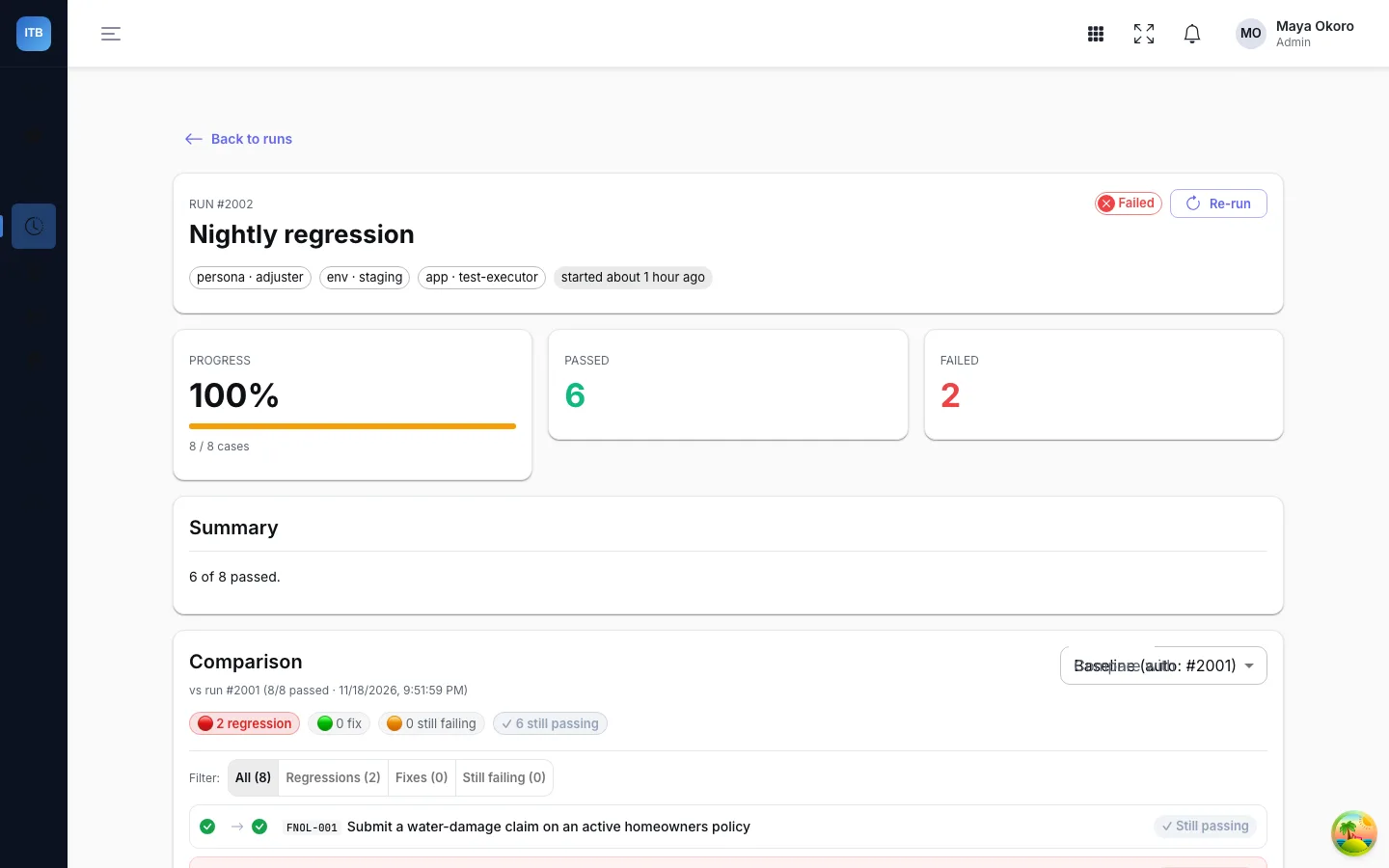
A release goes to staging on Wednesday afternoon. That night the suite passes 6 of 8. Both failures passed the night before, so both are regressions, and the webhook goes out with each one analysed:
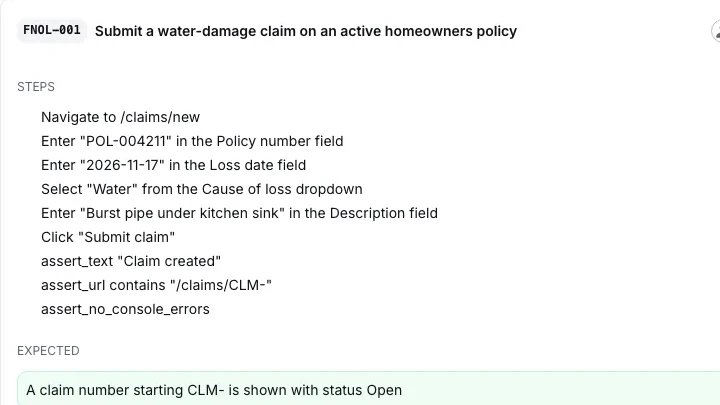
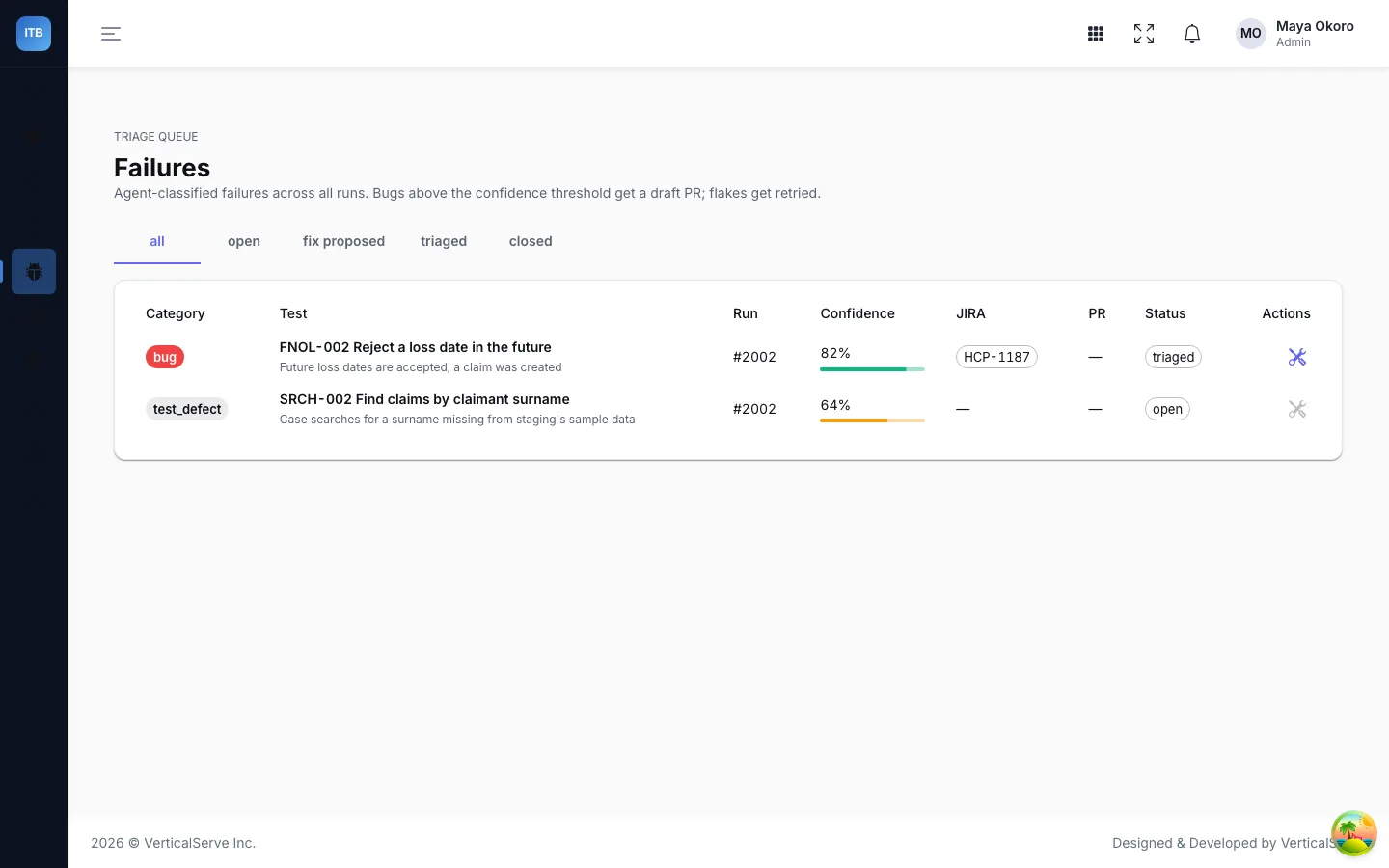
- FNOL-002, reject a loss date in the future. The assertion for the error text failed and the page had moved on to a new claim. Analysis: product_bug; the date picker's maximum and the server-side check were both lost in the release.
- SRCH-002, find claims by claimant surname. The row count was zero. Analysis: test_design; the surname in the case does not exist in staging's data since a refresh, and the search itself works.
Thursday: two different fixes
The product bug goes to the claims team with the case id, the error and the analysis. The case stays exactly as it is: it caught a real defect, and it should stay red until the fix ships. The test-design problem is Maya's: she points SRCH-002 at a claimant from the environment's sample data and re-runs that single case to confirm it passes.
Friday: quiet, for the right reason
Friday night's run shows SRCH-002 as a fix and FNOL-002 as still failing, so no regression, so no webhook. The team is not paged about a bug they already know about, and the case will turn green by itself when the fix is released.
What made it work
- A small frozen suite. Eight cases that must never break, run every night, are worth more than eighty that sometimes run.
- Assertions on every case. Both regressions were caught by explicit assertions, not by a step happening to throw.
- The right baseline. Same plan, same persona, same environment: the comparison only flagged what changed.
- Telling the two kinds of failure apart. One went to developers, one stayed with QA, on the same morning.